Well. It's my last Sunday subletting at HamCore and I have to use up all my food by (Thur|Fri|Sat) of next week.
SP and I made delicious whole wheat cookies with curry powder, cinnamon, and dark chocolate. We did not freeze the dough (as the instructions say), and after baking, we both proceeded to devour the whole batch of cookies (well, we made half a batch of cookies - 1 leftover stick of butter) while watching Sheep in the Big City. These cookies were quite filling (both emotionally and physically) and tasted a bit like gingerbread and had a satisfying sandy texture. I also wanted to just eat the cookie dough raw. So there - no more butter and chocolate! SP tried to grind a cinnamon stick, first using a knife (nice little chunks, but highly inefficient), and then using a cocktail masher + bowl. We ended up with sizable chunks of cinnamon along with the puny bits.
I also had about a liter of skim milk leftover and I was afraid that it would go bad, so I decided to freeze it with some maple syrup, to make milk and maple granita. Basically, you break the ice slurry every hour or so until you have pin-sized ice crystals. You can easily chip at this structure to get a good amount of dessert. It is not creamy but it's fine. I'm not sure why I didn't make this with all the leftover milk and half&half during the semester. So, milk used!
Finally, I was a counselor for an Engineering camp last week, and at the final reception, there was a giant cake, with an anticipated 100+ servings (I assume - there were 69 students, and you have to include their families!). Miraculously, there were about 13 slices leftover, and they were going to trash all those slices! So, I claimed it, took it to DRL, fed some physicists, and brought the rest home to eat. Unfortunately, the end pieces of cake were slathered with "American Buttercream Frosting", a publicly-celebrated disaster. To me, that stuff is vile. Fatty and flavourless. I scraped off most of it from the cake parts and ate those, but I didn't want to throw out this butter+powdered sugar concoction, like I have done in the past (at least three times, especially whenever we got the Costco cakes). The answer hit me like a slice of pie hitting a serving plate - bake with it! Duh!
So I mixed it with the rind, juice and pulp of two lemons I happen to have, 1.5 c of whole wheat flour, a sprinkle of instant rice (just for experimentation) and some baking soda, and baked the stiff dough at 350 F for 10 minutes on the middle rack of the oven. I ended up with 18 cookies with a crusty exterior (crispy bottoms) and a cooked gooey filling. The cookie is not particularly sweet, and did not expand significantly while baking. It was quite lemony and I'm pretty glad I found a use for gross "American Buttercream Frosting"!
So, all I have now are about 6 eggs, some Brie, flour, almond meal, cocoa powder, oil, cooked pasta, rice, frozen mango, frozen veggies, an apple, and yogurt.
Showing posts with label whole wheat. Show all posts
05 August 2012
06 July 2012
Bread in the Form of Squashed Rolls
I've always had a floppy experience working with yeast. In Food Tech in Year 9, as a fun end-of-the-year project, we all made some bread. SC and I wanted to make chocolate cheese bread but we weren't allowed to because the combination was apparently ridiculous. We proofed our dough (chocolate and pistachio, a much more conservative combination) in the bottom of the oven, with yeast from the same packet as that of the other groups.
After baking, our asterisk-shaped dough had morphed into a small and stiff blob (insert joke here). It was like vaguely-chocolate flavoured hardtack (seabiscuits!). Conversely, everyone else had fluffy, poofy bread. So, I haven't cooked with yeast since then (except when my mum makes man[2] tou[2] (馒头) - steamed buns. It appears that I will never be able to make or taste the magnificent creation called chocolate cheese bread.
I know a lot about the yeast we use for cooking. S. cerevisiae. They like to grow at 30 degrees C, and they replicate every 90 minutes. They can have a leu2 selectable marker, because they need leucine. Histone chromatin modifications alter viability and growth, with H4K16 and H4K5 being the ones I researched. I'm also sick of smelling them.
Despite all this scientific knowledge, I still can't bake with them. Or maybe I just picked up a bad batch of yeast. Certainly, the yeast isn't dead, because there were bubbles in the sponge (the yeast+ warm water + sugar mixture), and the dough DID rise and nearly doubled in size.
The brand of active dry yeast that I used was Hodgson Mill. Last month, my croissants failed with them too (but that might've just been because I accidentally killed the yeast during the sponge-making? It did rise a bit).
As I sit here chewing this semi-dense lump of cooked dough with puny air bubbles, I wonder what went wrong. Was it the recipe? I let it rise for 30 minutes longer (1 h as opposed to 30 mins), so did that mess up my bread? I used oil instead of butter, but that shouldn't have affected anything. I think it's time I go and bought more yeast. Real bread must be made, soon.
The brand of active dry yeast that I used was Hodgson Mill. Last month, my croissants failed with them too (but that might've just been because I accidentally killed the yeast during the sponge-making? It did rise a bit).
As I sit here chewing this semi-dense lump of cooked dough with puny air bubbles, I wonder what went wrong. Was it the recipe? I let it rise for 30 minutes longer (1 h as opposed to 30 mins), so did that mess up my bread? I used oil instead of butter, but that shouldn't have affected anything. I think it's time I go and bought more yeast. Real bread must be made, soon.
| Yeast bubbling, with a dollop of oil. |
| Bubbles. I'm not sure whether there is enough live yeast. |
| The dough, after 1 cup of flour. |
| After 15 minutes of rising in my bedroom. |
| After cutting and rolling the dough...doesn't look too promising. |
| After 30 more minutes of rising, in the oven with boiling water. Looks like it might work! |
| After baking. The rolls have shrunk. DECREASED IN VOLUME. HOW COME!? This was a huge disappointment. |
| I end up with something resembling soda bread. It's a bit crumbly, slightly dense, has little holes, and is not the expected fluffy dinner roll. |
15 May 2012
Portal Cake!
Today I made a Portal cake but failed at making jelly. This is a very sad day.
My brother finished his AP exams today, and as he is going to college next year, this is a graduation/belated birthday/end-of-high-school/congrats on [college name]! cake. I wanted to make a Team Fortress 2 cake but I couldn't figure out what object to make. Pyro? Sandvich (in other news, I got a Dalokohs bar yesterday!)? Natascha?
So, I stuck with Portal's black forest cake, even though none of us like fake cherry flavouring or maraschino cherries. My brother likes orange juice though, so there's orange juice in the cake and jelly. He also likes coconut, so the whole cake is covered in chocolate coconut ganache.
Unfortunately, he has not eaten the cake (and I don't think he will) because he had a bad day with bad news and dinner was ruined.
On the bright side, this means that the cake is now mine. Look at the lush back yard. It's been barely a week and the lawn needs mowing again.
The cake recipe is from here.
1. I substituted 100 g flour with whole wheat flour, and 15 g with wheat germ. No one will notice!
2. Instead of 240 ml of milk, I used 120 ml milk + 120 ml orange (put in LAST--acidic, reacts with baking soda).
3. I used 1 tsp baking soda instead of 1/2 tsp.
4. Less sugar! ~250 g instead of 400 g.
I made three layers because I only have 17-cm diameter cake pans (6.69-inch, as opposed to 9-inch). Later, I realised that the Portal cake only has two layers!! Boo. I used all three layers in the end though. My cakes weren't flat, so I shaved off the cake tops until they were parallel to the bottom of the cake, meaning that each layer was thinner.
The first and only "black forest cake" I've ever had was on my 10th (or 11th?) birthday. We bought it from ParknShop, and although it was labelled as "black forest cake", it was actually a chocolate swiss roll with jelly and cream filling. I wanted to emulate that, so I made cherry orange jelly for the filling of the Portal cake. However, although the jelly set, it was extremely watery and had the consistency of thick jam. A lot of it oozed out so I ate it. I'll just pretend it's chocolate cake "infused" with cherry orange flavouring...
The chocolate ganache recipe is from here, although I changed it up a lot.
All you have to do is simmer the heavy cream and throw in all the chocolate, and then all the coconut.
100 ml heavy cream (but maybe fatty milk will suffice?)
150 g dark chocolate chips
150 g shredded coconut (sweetened...but you should use unsweetened)
You MUST wait for this to cool down as much as possible before you spread it on the cake or else it's just going to drip/fall off. As it was super sticky, I couldn't figure out how to ice the cake with it. It turns out that you can scoop some ganache onto the back of your giant spoon, and spread it UPWARDS onto the sides of the cake. After an hour or so, the ganache will be solid enough that when you poke it, only some oily substance gets onto your finger (as opposed to a glob of ganache).
This coconut ganache gives a great "Portal"-esque texture to the cake. Initially, I was going to make a zillion chocolate shavings to press onto the cake. I am EXTREMELY glad I didn't have to endure that tedious task.
The white icing is fat free yogurt + powdered sugar + coconut, in a ratio of 1:6:6. You only need a tiny bit. The red blobs, which are supposed to be maraschino cherries, are actually gum balls that we are never going to eat. We only had 7, so I cut one in half (to make two halves).
We don't have real candles so I used a peppermint stick thing taped to a paper flame that says "congratulations!" on it. I took a lot of pictures because this cake looks really pretty (and tastes good, according to me and my sister, who ate a lot of cake scraps and icing).
Tags
black forest cake,
cake,
cherry,
chocolate,
coconut,
game,
ganache,
jelly,
pie-314,
portal cake,
valve,
whole wheat,
yogurt
04 January 2012
Crêpes
Today I found out that I am bad at flipping crêpes. Here is a picture of a crêpe with a rip in it, beneath the fold.
I got a French crêpe recipe from here (it's in French--my French is useful! Okay, I could've used Google Translate, but it has glitches-- it translated "1 tbsp butter" to "1 cup butter")! I made about 6 pan-sized crêpes from the recipe. Crêpes are really thin.
I used whole wheat flour, which I guess isn't traditional... but oh well.
My first problem was that the butter wouldn't melt when I was mixing the batter. Well, duh, it's something like 15 degrees C in the house! So, I ended up having really gloopy batter, but the crêpes turned out intact.
Another problem was that I would flip the crêpes over before the bottom side had been thoroughly cooked, and I couldn't flip the crêpes correctly with my spatula. I'm sure there is a more efficient way of making crêpes...but no one has ever taught me. I ended up picking up opposite edges of the crêpe with my fingers (hot? No...compared to fresh coffee, not really) and the spatula, and somehow maneuvering it some 180 degrees.
Taste? Well, nothing burned, the crêpes were moist, milky, soft, and gooey and... crêpe-like (yes, they tasted like crêpes! Except, chewier due to the whole-wheat flour). They were more oily than I would've liked... I guess I should use melted butter next time (but I hate the smell of microwaved butter)? They were a tiny bit sweet, which I have a problem with; I guess I would just prefer to have really sweet crêpes, or non-sweet crêpes. Eating tiny-bit-sweet-crêpes is like drinking water with a tiny bit of sugar - not plain ol' thirst-quenching, and not delicious-sugary-drink either.
Maybe I just prefer the pancakes that I used to eat in Australia? I don't even know how those were made, but they were poofy (not American pancake poofy, though), dark brown, the size of a coaster, and full of holes on one side.
I got a French crêpe recipe from here (it's in French--my French is useful! Okay, I could've used Google Translate, but it has glitches-- it translated "1 tbsp butter" to "1 cup butter")! I made about 6 pan-sized crêpes from the recipe. Crêpes are really thin.
I used whole wheat flour, which I guess isn't traditional... but oh well.
My first problem was that the butter wouldn't melt when I was mixing the batter. Well, duh, it's something like 15 degrees C in the house! So, I ended up having really gloopy batter, but the crêpes turned out intact.
Another problem was that I would flip the crêpes over before the bottom side had been thoroughly cooked, and I couldn't flip the crêpes correctly with my spatula. I'm sure there is a more efficient way of making crêpes...but no one has ever taught me. I ended up picking up opposite edges of the crêpe with my fingers (hot? No...compared to fresh coffee, not really) and the spatula, and somehow maneuvering it some 180 degrees.
Taste? Well, nothing burned, the crêpes were moist, milky, soft, and gooey and... crêpe-like (yes, they tasted like crêpes! Except, chewier due to the whole-wheat flour). They were more oily than I would've liked... I guess I should use melted butter next time (but I hate the smell of microwaved butter)? They were a tiny bit sweet, which I have a problem with; I guess I would just prefer to have really sweet crêpes, or non-sweet crêpes. Eating tiny-bit-sweet-crêpes is like drinking water with a tiny bit of sugar - not plain ol' thirst-quenching, and not delicious-sugary-drink either.
Maybe I just prefer the pancakes that I used to eat in Australia? I don't even know how those were made, but they were poofy (not American pancake poofy, though), dark brown, the size of a coaster, and full of holes on one side.
22 August 2011
Potato Gnocchi
With a surplus of potatoes, I've been thinking of ways of eating them (other than mashed potato, even though I love mashed potato), and one of the ideas I found was potato gnocchi. I'm not really a gnocchi fan, since I don't have an emotional association with it. In addition, since we lack sauce in the house, the gnocchi is just another carbohydrate at dinnertime that pairs well with spicy stir fried Chinese food.
I agree with the recipe; the potatoes should've been baked instead of boiled because that way, they would've been drier and I wouldn't've obtained soggy, gruel-like gnocchi. Ah well. At least they stayed in shape (irregular) and didn't disintegrate in the boiling water. Maybe I should've baked them or fried them.
I don't think that this was the most appetising way of using potatoes, so I'm never making potato gnocchi again. Instead, I'm just going to make a freezer-shelf full of potato cake (tomorrow's post), which everyone, even MY SISTER, enjoyed.
INGREDIENTS
800 g mashed potato
~140 g whole-wheat flour (just keep adding until the dough is malleable and not too sticky)
oregano
pepper
salt
METHOD
1. Mix everything.
2. Pluck small balls from the dough and stick into a pot of boiling water.
3. Take out after a few minutes.
Tags
flour,
gnocchi,
italian,
mashed potato,
oregano,
pie-314,
potato,
potato gnocchi,
whole wheat
12 August 2011
Australian Meat Pie...
I highly doubt I could make an authentic Australian meat pie. Even if I did, I wouldn't be able to eat it. Though, I guess if/when I go to Australia (That shop at Penrith Plaza, particularly), I'd probably actually eat (*gasp*) the beefy concoction enclosed in a crusty pastry shell.
The first step towards making a nice Australian meat pie would be to obtain a neat, authentic recipe. I'm not really sure whether this is an authentic recipe, but I chose it because Vegemite was one of the ingredients and everything was in metric units. So, at least I know it's from someone from the other-ish side of the world.
I didn't use prefrozen crust though (I made a whole-wheat short crust instead), and I did use different ingredients...but I don't feel like delving into this subject since HFCS and other random ingredients are involved. The filling smelled just like Australian meat pies (AHHHHH :D) which brought back a shock of nostalgia. When I smell the filling, I think about breezy Saturdays at Penrith Plaza, or at the public library, or walking down the lawn, or running up and down the hills at Nepean River. Carefree days. Unfortunately, I made too little pastry. Unlike the standard sized pies, I made small ones that fit into egg tart shells. Why? Er, I don't have any other containers for these pies...
Although it appeared that my filling was too runny, after baking the pies in the oven (430 degrees F for 10 minutes, 375 degrees F for 7 minutes, and... sit in the oven for half an hour), the texture and moist-ness was perfect!
Tags
australia,
australian meat pie,
beef,
meat,
meat pie,
onion,
pastry,
pie,
pie-314,
whole wheat
11 August 2011
Irish Food!
I'm sort of Irish. I was born in Dublin and lived there for two years before moving to Australia. However, I do lack pretty much everything that pertains to Irish culture, so I don't think it makes sense to call myself Irish. Recently, I figured that I should at least learn a little about Irish cuisine. No, not American-Irish food, and not barrels-of-alcoholic-drinks Irish cuisine. I mean legitimate, daily, traditional, Irish cooking.
The internet is not really helping, funnily enough. Something I realised is that U.S. cuisine is composed of manipulations of and additions to other culture's cuisines. For instance, plain ol' sponge cake. From a simple butter-sugar-egg-flour sponge cake, the U.S. has evolved it into some seven layer sponge cake infused with peppermint oil, studded with three kinds of nuts, and sandwiched between tons of buttercream icing with sun-dried strawberries and chocolate-orange ganache and THEN topped with sprinkles and whole chunks of candy bars, AND FINALLY drizzled with a blueberry brown sugar glaze and enveloped in fondant or marzipan. I don't know. It's just that a basic recipe for the commoner gets thrown into a bucket, and comes something that is obviously not simple or traditional.
The irksome part is that it gets labelled as traditional.
So, when I was looking for a traditional Irish soda bread recipe, I found recipes that included eggs, raisins, sugar (a whole cup of sugar? ARE YOU KIDDING ME?)...and they were all labelled as "traditional" or "authentic" or whatever-the-heck. I used a recipe from here, thinking, hmm the reviews look pretty good...
...but the batter was too liquidy. It was like cookie batter, and was un-kneadable. I baked it anyway, and it tasted alright. A little moist, like an unsweetened cake, studded with pieces of dry fruit.
I did find a neat website that advocates the old fashioned soda bread and scorns the ones made with caraway seeds/sugar etc. This website, The Society for the Preservation of Soda Bread, says that the common people back then just didn't have raisins or honey or seeds or whatever exotic stuff to use in their soda bread. Well duh. So, I trusted their recipe and made a nice, doughy, kneadable round of brown soda bread, with a neat X-shaped cut at the top. Like the recipe says, there's a hollow sound when I hit the loaf with a fork. The interior is pretty dry, tastes a bit like baking soda, and is chewy. It's just like crumbly whole wheat bread, really, except that it lacks yeast. The crust, my favourite part of bread, is amazing!! So crispy!
The only problem I had with making soda bread was that I didn't have buttermilk, and I don't really see any point in buying any. For my first batch of soda bread, I needed 500 ml of buttermilk, so I just got 500 ml of low-fat milk and juiced in a lime. The bread rose, so I suppose that worked. This time, I only made half a batch of soda bread, so I used about 200 ml milk and 1 tbsp of lemon juice (we happen to have one of those plastic packets). I was freaking out that there wasn't enough acidity because the milk didn't curdle, so I threw in another tablespoon of vinegar. This batch of soda bread rose, so I guess this works too. The bubbles are pretty small and uniform, which is different from those artisan yeast-made breads, in which the holes really vary in size.
One problem, of course, is that I don't remember ever eating soda bread from Ireland. Oh well.
Knowing the way I cook, even though I intended to follow the recipe exactly, I ended up doing this (and therefore I didn't do the whole metric thing):
INGREDIENTS for one 15 cm diameter x 6 cm tall round loaf of soda bread
1.8 cups of whole wheat flour
0.2 cups of white flour
200 ml milk
25 g butter (because I used fat-free milk. If I had used whole milk, I wouldn't have included the butter)
1 tbsp lemon juice
1 tbsp vinegar
1 tsp coarsely ground salt
1. Add vinegar and lemon juice into the milk and let sit.
2. Mix all the dry stuff.
3. Rub in butter.
4. Add the milk/vinegar/lemon juice mixture in, around 50 ml at a time.
5. Make a dough that will sort of stick together; it's okay if it's crumbly. Just knead it a little and plop it into a bowl that has been lightly greased with the wrapper from the butter or sprinkled with some flour.
6. Stick a lid on the container and put on the bottom rack of an un-preheated oven. Bake for 15 minutes at 425 degrees F.
7. Take off the lid and continue baking the bread for 15 minutes at 425 degrees F.
8. The bread's actually basically cooked now, so turn the oven off and keep the bread in the oven for about half an hour.
9. Yay!!
From now on, though, I think I'd prefer to make hand-sized rolls of bread because
1. They cook faster = lower gas bill
2. MORE CRUST!!!!!!
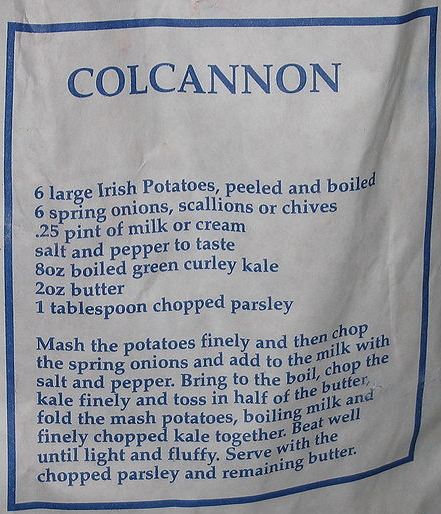
In addition to making Irish soda bread, I also made Irish Colcannon last week. I used the recipe on the back of a sack of potatoes although I used a lot more cabbage than the usual recipe calls for. I think I used about 400 g of dark green cabbage (NOT the sweet, white/light green rounds of cabbage that you find in salad mixes), since it was fresh from the garden. Actually, the potatoes were from the garden too, as were the spring onions.
Tags
baking soda,
bread,
buttermilk,
cabbage,
colcannon,
irish,
irish soda bread,
lemon juice,
pie-314,
potato,
soda,
traditional,
vinegar,
whole wheat
08 August 2011
Battle of the Brownies!
^Vegetable Brownie
In an effort to get my sister to eat more types of vegetables, I told her that she'd have to eat one slice of eggplant from the casserole I made today before she could eat her brownie. She initially agreed, and we made brownies. My mum thwarted my plan, though, by giving in to my sister's crying/whining and telling her that she could just eat cabbage instead. I didn't take any pictures of the casserole because it wasn't particularly pretty. However, I did get pretty riled by the fact that my sister just plain refuses to try new foods.
In order to show her that vegetables CAN actually be delicious, I made two types of brownies today (with her help. I think that introducing people to cooking from scratch is great education). The first one was the generic, perfect, cliche chocolate brownie. The second one was a whole wheat flour, zucchini and cabbage brownie. You're probably retching at the thought, right? On the contrary, though, the zucchini and cabbage brownie didn't taste like vegetables at all! You couldn't even SEE the shredded zucchini (you could see some of the shredded cabbage because I got lazy with the grater).
The generic brownie was perfectly moist, dense, and chewy. It's the ubiquitous brownie you can get from a box, from the freezer, from scratch, or from a bake sale. It's not cakey, and it was kind of sweet because my sister added more sugar (since she wanted really sweet brownies). It was pretty fudgy. This is the kind of thing I would make for other people who aren't accustomed to my weird cooking style.
The recipe for the GENERIC BROWNIES is adapted from here, and I made only half the batch since my sister is the one who's going to be eating this one.
INGREDIENTS for a 200 cm^2 pan of thin brownies.
50 g oil
100 g caster sugar
1 egg
vanilla
25 g cocoa powder
50 g all-purpose white flour
0.25 tsp baking powder
METHOD
1. Mix oil, sugar, egg and vanilla.
2. Add in cocoa powder, flour, and baking powder, folding in a figure 8. The batter looks like this.
3. Bake at 177 degrees C/ 350 degrees F for 18-20 minutes on the bottom rack of an un-preheated oven. If you use the top rack, bake for 23 minutes.
*******
The vegetable brownie was not too sweet since I cut the sugar in half, not as oily, and definitely more cakey. I was actually pretty disappointed that I ended up with a cake rather than a brownie... it was more crumbly, but still pretty succulent. The cake is really dense and there is a slight grainy whole wheat flour texture to it, which I enjoy. Although I think it may be confirmation bias, there was a clean, vegetabl-y aftertaste which kind of reminds me of cucumber. The interesting thing about this vegetable cake/brownie is that the batter was the consistency of cookie dough, or super thick porridge. It also didn't rise much in the dish (Guess what?! I found a glass 20 cm square baking dish! Whoooo!!! My mum kept all the glassware in the top cabinet, above the stove...and now I'm putting it to good use!).
The recipe for the VEGETABLE CAKE is adapted from here. Incidentally, these are vegan. I aspire to make these brownie-like in the near future. Modifications for brownies include using less flour and using more oil...
INGREDIENTS for a 400 cm^2 pan of thick cake
50 g oil
110 g caster sugar (more if you'd like)
200 g grated vegetables (particularly zucchini, but I used a combination of zucchini and about 75 g of cabbage. Oh, right. Zucchini = Courgette)
pinch of salt
50 g cocoa powder
140 g whole wheat flour
30 g all-purpose white flour (I should've cut this out)
2 tsp baking soda
METHOD
1. Mix oil, sugar, and vegetables.
2. Add cocoa powder, salt, baking soda, and flour(s). Mix thoroughly. The batter will be extremely thick and sticky, sort of like moist cookie batter or thick corn grits. Or thick rice pudding.
3. Scoop batter into baking dish and spread it evenly.
4. Bake at 177 degree C/350 degrees F for 23 minutes on the bottom rack of an un-preheated oven. The shredded zucchini will miraculously disappear.
5. Somehow, half of the cake will disappear within a few well-chosen minutes.
Tags
brownie,
cabbage,
cake,
chocolate,
cocoa,
courgette,
health,
oil,
pie-314,
vegan,
vegetable,
whole wheat,
zucchini
Subscribe to:
Posts (Atom)